Sunday, February 27, 2011

Jazz and Bossa Artist of the Week (february 27 - march 5): Lisa Hilton

Jazz and Bossa Artist of the Week (february 27 - march 5): Lisa Hilton


Lisa Hilton / Bio

http://www.lisahiltonmusic.com

With what has been described as a "throbbing undercurrent of West Coast Cool", critically acclaimed composer, pianist and bandleader, Lisa Hilton, "has been compared, to some of the best pianists in history, such as Bill Evans, and Brad Mehldau" in the book "The New Face of Jazz" by Cicly Janus, (Random House), and to such diverse musicians as Dave Brubeck, Oscar Peterson, Erik Satie, and even Debussy, but Hilton's sound and touch are all her own. Dubbed by JazzReview a "Lioness" of Jazz", Hilton has continually worked with some of the greatest jazz musicians on the planet: Christian McBride, Lewis Nash, Larry Grenadier, Bobby Militello, Jeremy Pelt, J. D. Allen, Brice Winston, Gregg August, Rudy Royston, Reggie McBride and Steve Wilson to name a few, producing an album a year of her own compositions and arrangements. She has also recorded her recent releases with the legendary, twenty - time Grammy winning engineer/producer, Al Schmitt. Her music continues to receive high marks, longevity in radio airplay in the US, Canada and around the world, and is regularly featured on syndicated programs like NPR's Morning Edition for what DownBeat Magazine calls, "A deeply expressive style - rich melodies and improvisations and an appealing impressionism". Hilton has 12 stateside CD's and 130+ tracks on iTunes.

Lisa Hilton was born in San Luis Obispo, a small Southern California town, into a very musical family. Passionate about the piano from a young age, she was later inspired by stories of her great uncle, Willem Bloemendaal (1910-1937 Vlaardingen, Netherlands), a young Dutch virtuoso pianist. A simple colored keyboard guide allowed Hilton to teach herself to play the piano at six, and composing tunes soon followed. She avidly began the formal study of classical and twentieth century piano literature at eight, accompanied the school chorus at nine, led the flutes in the school band by ten, and later, accompanied high school theatre productions on the piano. As a teen, playing Standards and blues replaced Bartok and Beethoven. In San Francisco at college, she studied with a renowned piano instructor, who was also known as a demanding teacher and perfectionist. Disillusioned with the classical canon and overly rigid teaching methods, Hilton suddenly opted out of the piano, switched her studies, and graduated with an art degree. Now Hilton often speaks that her passions of music and art are combined and as the role of a musician as an artist in the world at large; "Music is an art. You need to know instinctually what to do." In 1997, on hearing a neighbor, multi Grammy winning producer/composer David Foster, discuss composing, her long lost love for music and the piano was reignited. "I think I was always a composer at heart," Hilton recalls, "but as a young girl in a small town, I had no awareness that I could create a career out of what I enjoy doing. I now have a deep and abiding love for the piano which seems even stronger after not playing for so many years".

The difficulties she experienced with her own music education, has led Hilton to contribute to music programs for children and teens, especially for those that serve the blind or the visually impaired. She has performed benefit concerts for Helen Keller's alma mater, Perkins School for the Blind, near Boston (2006, 2007), The Chicago Lighthouse for People Who are Blind or Visually Impaired, (2009, 2010), and The Junior Blind of America, (2010), Camp Bloomfield for the visually impaired, (1998, 1999) and ArtsReach (Malibu, CA). Hilton has also spoken to students at The Grammy Museum (2010) and other locations.

Performances: Hilton loves to perform: “I have a need to share our world musically. I have an incredible band, but the solo shows that I do also go over really well with audiences”. Hilton explains how her compositions or arrangements were inspired, to draw listeners in to her instrumental jazz. “I’ve had adults ecstatically proclaim that they could really hear what I was communicating – that they could really ‘get it!’ Others have been moved to tears, or call an evening ‘magical’, and then I’ve had teens shout out ‘YOU ROCK!’ Touching others musically is really what I desire to do.”

Radio: Hilton’s music is played on hundreds of radio stations in the U.S., Canada and around the world, and has been featured prominently on shows like NPR’s Morning Edition, various airlines and XM. Broadly appealing to all ages, Hilton’s albums appeared on many radio charts such as JazzWeek, CMJ, and Earshot Jazz/Canada.

Television: Hilton has been featured on CBS/Boston and WGN/Chicago.

Written Word: A published author, Lisa Hilton has also written for Jazz Times and Jazziz magazine. She is currently working on a book about musicianship, and appears in the Random House book, “The New Face of Jazz”, by Cicily Janus. She has had a music blog on her website since 2001.

Workshops: Due to the challenges in her own music education, Hilton is now very committed to music programs for children, teens and college students. Hilton also enjoys working with people who are blind or visually impaired, such as programs at Perkins School for the Blind near Boston, the Junior Blind of America's Camp Bloomfield in Malibu, and The Chicago Lighthouse for People Who are Blind or Visually Impaired

Favorite jazz pianists: Brad Mehldau, McCoy Tyner.

Musical influences: Miles Davis, Thelonious Monk

Sunday, February 20, 2011

Jazz and Bossa Artist of the Week (february 20- 26) - Anat Cohen


Anat Cohen
http://www.AnatCohen.com

An established bandleader and prolific composer, idiomatically conversant with modern and traditional jazz, classical music, Brazilian choro, Argentine tango, and an expansive timeline of Afro-Cuban styles, Anat Cohen has established herself as one of the primary voices of her generation on both the tenor saxophone and clarinet since arriving in New York in 1999.

In September 2008, Anat Cohen released Notes From The Village, her fourth album as a leader. Recorded at Avatar studios in New York City, the album builds on Cohen's acclaimed 2007 releases, captures the thrilling energy of her live shows, and proves her to be an artistically adventurous writer and performer. Notes From The Village finds Anat leading a quartet of some of the most sought-after, engaging young performers in New York, including pianist Jason Lindner, bassist Omer Avital, and drummer Daniel Freedman, with accompaniment from guitarist Gilad Hekselman on three tracks. The album features compositions written by Cohen as well as her interpretations of songs by Fats Waller, John Coltrane, Sam Cooke and Ernesto Lecuona.

“In preparing for the recording,” says Anat “I really wanted to capture the free, risk-taking, open quality this band achieves when performing live. I also wanted to stretch my compositions, and arrangements.” Early responses to the album have been overwhelmingly positive; The New York Times’ Nate Chinen wrote that “Notes From The Village is a resounding confirmation; yes, she is the real deal”, DownBeat Magazine awarded the release four stars, stating that “Cohen makes it seem easy, mixing a gift for melody and an improvisational fluidity that has few peers today.” Anat’s previous outings, Noir and Poetica were released simultaneously in April 2007, inspiring a string of enthusiastic reviews. The Washington Post said that “Cohen has emerged as one of the brightest, most original young instrumentalists in jazz [...] [she] has expanded the vocabulary of jazz with a distinctive accent of her own.” The Village Voice spoke of her “Enviable insouciance” and how “she alludes to the mystical in a merry way,” and Downbeat magazine expressed the opinion that “Noir could be a classic” and “[Cohen’s] stately intonation and unforced elegance on clarinet could take her to the top.”

Anat has performed for audiences in New York’s Village Vanguard, Jazz Standard, Iridium, The Jazz Gallery, and the JVC Jazz Festival. She has also appeared at the Chicago Jazz Festival, Washington DC’s Kennedy Center, San Francisco’s Yoshi's, Boston’s Regattabar, the North Sea Jazz Festival, the Monterey Jazz Festival, and the Montreal Jazz Festival. Anat’s July 2007 engagement at the Village Vanguard in New York was a historic one; Anat is the first female reed player, and the first Israeli to headline at the club. Ms. Cohen’s accomplishments have been recognized in a flurry of awards and distinctions from critics and fans alike; She topped the Rising Star- Clarinet category in DownBeat Magazine’s critics poll in both 2007 and
2008, and placed prominently in a total of four categories including Rising Star Jazz Artist - where she ranked second and was the only female artist to make the list. Anat was also mentioned on DownBeat’s readers poll in 2007 and 2008. The Jazz Journalists Association named Anat Cohen Clarinetist of the Year by in both 2007 and 2008 – the first time in the history of the awards that an artist has earned top clarinet honors two years running. Noir and Poetica both appeared on many year-end best-of summary lists, including those of Paste magazine, The New York Sun, Slate, JazzTimes and others.

Born in Tel Aviv, Israel, Anat grew up with musical siblings; her older brother Yuval is himself a saxophonist of note, and her younger brother, Avishai, is one of New York’s busiest trumpeters. She began clarinet studies at age 12 and played jazz on clarinet for the first time in the Jaffa Conservatory’s Dixieland band. At 16, she joined the school’s big band and learned to play the tenor saxophone. The same year, Anat entered the prestigious “Thelma Yelin” High School for the Arts, where she majored in jazz. After graduation, she discharged her mandatory Israeli military service duty from 1993-95, playing tenor saxophone in the Israeli Air Force band.
In 1996, Anat matriculated at Berklee College of Music in Boston. There she met faculty member Phil Wilson, who encouraged her to play clarinet, and other inspiring teachers such as Greg Hopkins, Ed Tomassi, Hal Crook, George Garzone, and Bill Pierce, and an elite international peer group of students.

During her Berklee years, Anat visited New York during breaks between semesters, making a beeline for Smalls to soak up the hybrid of grooves, world music and mainstream jazz that people like Jason Lindner and Omer Avital were then evolving. Back in Boston, she played tenor saxophone in a variety of musical contexts with various bands including Afro-Cuban, Argentinean, klezmer, contemporary Brazilian music and classical Brazilian choro. Anat also began her association with Sherrie Maricle’s top-shelf allwoman big band Diva Jazz Orchestra, which continued into the new millennium.

Once ensconced in New York, Anat quickly found work in various Brazilian ensembles like the Choro Ensemble and Duduka Da Fonseca’s Samba Jazz Quintet, and started performing with David Ostwald’s “Gully Low Jazz Band,” which explores the music of Louis Armstrong, Bix Beiderbecke, Jelly Roll Morton, Sidney Bechet and their Pan-American contemporaries. Anat documented her bona fides on her debut CD, Place and Time, one of All About Jazz-New York’s “Best Debut Albums of 2005.” On the liner notes for Notes From the Village, Ira Gitler writes “She is formidable. Long may she continue to enrich the music in myriad ways.” There is every indication that her star will continue to rise for a long time to come.

Friday, February 18, 2011

Jazz and Bossa Artist of the Week (february 13 - 19) - Esperanza Spalding

Jazz and Bossa Artist of the Week (february 13 - 19) - Esperanza Spalding


http://www.esperanzaspalding.com/

If “esperanza” is the Spanish word for hope, then bassist, vocalist and composer Esperanza Spalding could not have been given a more fitting name at birth. Blessed with uncanny instrumental chops, a multi-lingual voice that is part angel and part siren, and a natural beauty that borders on the hypnotic, the 25-year-old prodigy-turned-pro might well be the hope for the future of jazz and instrumental music.

Spalding was born in 1984 and raised on what she calls “the other side of the tracks” in a multi-lingual household and neighborhood in Portland, Oregon. Growing up in a single-parent home amid economically adverse circumstances, she learned early lessons in the meaning of perseverance and moral character from the role model whom she holds in the highest regard to this day – her mother.

But even with a rock-solid role model, school did not come easy to Spalding, although not for any lack of intellectual acumen. She was both blessed and cursed with a highly intuitive learning style that often put her at odds with the traditional education system. On top of that, she was shut in by a lengthy illness as a child, and as a result, was home-schooled for a significant portion of her elementary school years. In the end, she never quite adjusted to learning by rote in the conventional school setting.

“It was just hard for me to fit into a setting where I was expected to sit in a room and swallow everything that was being fed to me,” she recalls. “Once I figured out what it was like to be home-schooled and basically self-taught, I couldn’t fit back into the traditional environment.”

However, the one pursuit that made sense to Spalding from a very early age was music. At age four, after watching classical cellist Yo Yo Ma perform on an episode of Mister Rogers’ Neighborhood, the roadmap was suddenly very clear. “That was when I realized that I wanted to do something musical,” she says. “It was definitely the thing that hipped me to the whole idea of music as a creative pursuit.”

Within a year, she had essentially taught herself to play the violin well enough to land a spot in The Chamber Music Society of Oregon, a community orchestra that was open to both children and adult musicians. She stayed with the group for ten years, and by age 15, she had been elevated to a concertmaster position.

But by then, she had also discovered the bass, and all of the non-classical avenues that the instrument could open for her. Suddenly, playing classical music in a community orchestra wasn’t enough for this young teenager anymore. Before long she was playing blues, funk, hip-hop and a variety of other styles on the local club circuit. “The funny thing was, I was the songwriter, but I had never experienced love before. Being the lyricist and the lead singer, I was making up songs about red wagons, toys and other childish interests. No one knew what I was singing about, but they liked the sound of it and they just ate it up.”

At 16, Spalding left high school for good. Armed with her GED and aided by a generous scholarship, she enrolled in the music program at Portland State University. “I was definitely the youngest bass player in the program,” she says. “I was 16, and I had been playing the bass for about a year and a half. Most of the cats in the program had already had at least eight years of training under their belts, and I was trying to play in these orchestras and do these Bach cello suites. It wasn’t really flying, but if nothing else, my teachers were saying, ‘Okay, she does have talent.’”

Berklee College of Music was the place where the pieces all came together and doors started opening. After a move to the opposite coast and three years of accelerated study, she not only earned a B.M., but also signed on as an instructor in 2005 at the age of 20 – an appointment that has made her the youngest faculty member in the history of the college. She was the 2005 recipient of the prestigious Boston Jazz Society scholarship for outstanding musicianship.

In addition to the studying and the teaching, Spalding’s years at Berklee also created a host of networking opportunities with several notable artists, including pianist Michel Camilo, vibraphonist Dave Samuels, bassist Stanley Clarke, guitarist Pat Metheny, singer Patti Austin, and saxophonists Donald Harrison and Joe Lovano. “Working with Joe was terrifying,” she recalls, “but he’s a really generous person. I don’t know if I was ready for the gig or not, but he had a lot of faith in me. It was an amazing learning experience.”

Spalding’s journey as a solo artist began with the May 2008 release of Esperanza, her debut recording for Heads Up International, a division of Concord Music Group, which went on to become the best selling album by a new jazz artist internationally in 2008. The highly acclaimed release was the first opportunity for a worldwide audience to witness her mesmerizing talents as an instrumentalist, vocalist and composer. The New York Times raved, “Esperanza has got a lot: accomplished jazz improvisation, funk, scat singing, Brazilian vernacular rhythm and vocals in English, Portuguese and Spanish. At its center is a female bassist, singer and bandleader, one whose talent is beyond question.”

Soon after release, Esperanza went straight to the top of Billboard’s Contemporary Jazz chart where it remained for over 70 weeks. Spalding was booked on the Late Show with David Letterman, Jimmy Kimmel Live, the CBS Saturday Early Show, the Tavis Smiley Show, Austin City Limits and National Public Radio. Other highlights included two appearances at the White House, a Banana Republic ad campaign, the Jazz Journalists Association’s 2009 Jazz Award for Up and Coming Artist of the Year, the 2009 JazzWeek Award for Record of the Year, and many high profile tour dates, including Central Park SummerStage in New York and the Newport Jazz Festival. 2009 was capped by an invitation from President Obama to perform at both the Nobel Prize Ceremony in Oslo, Norway – where the Nobel Peace Prize is awarded – and also at the Nobel Peace Prize Concert.

In early 2010, Spalding was the subject of an in-depth profile in The New Yorker, she was also featured in the May 2010 Anniversary issue of O, The Oprah Magazine’s “Women on the Rise” (in a fashion spread that features portraits of 10 women who are making a difference in various careers), and she was again nominated by the Jazz Journalists Association for their 2010 Jazz Award for Up and Coming Artist of the Year.

If Esperanza marked a brilliant beginning for this gifted young artist, then Spalding’s August 2010 release, Chamber Music Society, sets her on an upward trajectory to prominence. Inspired by the classical training of her younger years, Spalding has created a modern chamber music group that combines the spontaneity and intrigue of improvisation with sweet and angular string trio arrangements. The result is a sound that weaves the innovative elements of jazz, folk and world music into the enduring foundations of classical chamber music traditions. Co-produced by Esperanza and Gil Goldstein (with string arrangements provided by both), Chamber Music Society finds Esperanza with a diverse assembly of musicians: pianist Leo Genovese, drummer Terri Lyne Carrington, percussionist Quintino Cinalli, guitarist Ricardo Vogt, and vocalists Gretchen Parlato and the legendary Milton Nascimento. The string trio is comprised of violinist Entcho Todorov, violist Lois Martin and cellist David Eggar.

In addition to touring with Joe Lovano, Spalding has also performed with pianist McCoy Tyner.

Monday, February 7, 2011

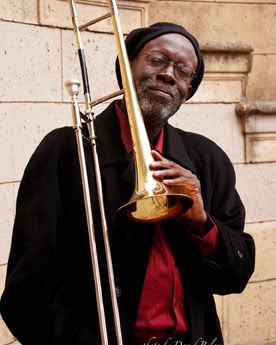
Jazz and Bossa Artist of the Week (february 6 - 12) - Wayne Wallace

Jazz and Bossa Artist of the Week (february 6 - 12) - Wayne Wallace


http://www.walacomusic.com/index.html
HISTORY AND EDUCATION

•Born in San Francisco, CA
•San Francisco State Performance Major
•Private study with Julian Priester, Bobby Hutcherson and Will Sudmeier La Escuela Nacional in Havana Cuba
INSTRUMENTS


•Trombone · Keyboards · Vocals
SPECIAL ACHIEVEMENTS

•Co-composed and co-arranged, along with Jon Jang, the soundtrack to "Speaking in Tongues," an award-winning documentary about bilingual education, currently broadcasting nationwide on PBS: www.speakingintonguesfilm.info
•Received a 2002 San Francsico Arts Comission grant for composing the music to The Quilt
•Received a 2002 Creative Work Fund grant for composing the music to The Quilt
•Composed and arranged the music for Entre El Aliento y El Sol for the New Shoes/Old Souls dance company, in January 1999
•Composed and arranged the music for The Quilt, a spoken word/dance piece based on a quilt designed by the artist Faith Ringold
•Composed and arranged the music for Dance Variations a suite for piano, cello and percussion for Jean Jeanrenaud of the Kronos String Quartet
•Received a 1996 grant from the ZellerbachFoundation for composition of a Jazz/Afro-Cuban musical suite
•Taught a Jazz and Blues Workshop at the National School of the Arts in Havana Cuba, in March 1994
•Received a 1993 N.E.A. grant for jazz composition to compose a three part suite Digging Up the Roots reflecting the diverse musical cultures of the San Francisco Bay Area
•Composed and arranged the music for the American Conservatory Theater 1993 production of Pecong by Steve Carter
•Awarded the 1993 Bay Area Theater Critics Award for best original score in a drama for the musical Pecong
•Co-composed and arranged the music for the 1991 Theater Works world premiere of the musical Go Down Garvey by Danny Duncan
•Taught a Afro-Cuban music workshop in West Germany June-July 1989

Sunday, January 30, 2011

Jazz and Bossa Artist of the Week (january 30 - february 5) - John Beasley

Jazz and Bossa Artist of the Week (january 30 - february 5) - John Beasley


http://www.reverbnation.com/johnbeasleymusic

http://www.youtube.com/watch?v=o1h8LWQReiE

In demand US pianist, composer and arranger John Beasley has played with everyone from Miles Davis and Chick Corea to Steely Dan and James Brown. His recording credits include Hollywood blockbusters Finding Nemo and Austin Powers and he is MD for hit shows American Idol and America’s Got Talent. His latest tour brings together bassist Buster Williams and multi-reedist Bennie Maupin, two original members of Herbie Hancock’s Sextet with drummer Jeff “Tain” Watts, to play music from Beasley’s latest CD Letter to Herbie, a tribute album to Herbie Hancock.

---------------------------------
Growing up around musicians, Beasley learned how to play piano, trumpet, oboe, drums, saxophone and flute and, because of his love for jazz, declined an oboe scholarship from the Julliard after high school. Beasley went on to play, tour and record with some of the biggest names around, including Miles Davis, Freddie Hubbard, Chick Corea, Queen Latifah (MD), Christian McBride, Steely Dan (MD), James Brown, Carly Simon, Chaka Khan, The Spice Girls, Jessica Simpson and Clint Black. While touring with Miles Davis, Beasley was inspired to release his first of eight solo recordings, which was produced by Steely Dan’s Walter Becker
Recognizing his talent for composing and arranging, major film studios such as Paramount, Disney and MGM have added Beasley's original piano sound and music to their projects. His work can be heard on box office hits WALL-E, Finding Nemo, Erin Brockovich, Godfather III, A Bug's Life and Austin Powers: The Spy who Shagged Me and TV shows Cheers, Family Ties, Star Trek and Fame.

With the popularity of reality shows, Beasley, started working as Musical Director or Arranger on some of the top music and dance shows, including American Idol, Pussycat Dolls Presents, The Search for the Next Doll, America’s Got Talent and Singing Bee. On Season 4 of American Idol, Beasley was Associate Musical Director overseeing the 12 female finalists. He arranged the selected songs and coached and rehearsed the contestants for their performances. To his credit, Carrie Underwood took the title and went on to earn a GRAMMY and be a No. 1 country music sensation.
Today, Beasley continues to release new music, tour with his band, juggle studio work (commercials, TV and films), conduct workshops, produce other artists, perform and produce music award specials, work on music reality shows, and tour with Queen Latifah as her Musical Director. His eighth album, Letter to Herbie, a tribute to 2008 GRAMMY winner, Herbie Hancock, which features Christian McBride, Jeff “Tain” Watts and Roy Hargrove was released April 2008, topping the Jazz Week Charts and up for Grammy consideration.
Beasley’s latest tour brings together bassist Buster Williams and multi-reedist Bennie Maupin, two original members of Herbie Hancock’s Sextet (Mwandishi and Sextant), with drummer Jeff “Tain” Watts, to play music from Beasley’s latest CD Letter to Herbie, a tribute album to Herbie Hancock.


“the one-time keyboardist for Freddie Hubbard and Miles Davis, reflects a variety of generational influences, incorporating the emphatic chordal clusters of Herbie Hancock, the rhythmic quirkiness of Monk and the lush intelligence of Art Tatum into a highly refined personal voice.”
-- Los Angeles Times

Saturday, January 22, 2011

Jazz and Bossa Artist of the Week (january 23 - 29) - Jane Ira Bloom

Jazz and Bossa Artist of the Week - Jane Ira Bloom


Photographer: Kristine Larsen

http://www.janeirabloom.com

Soprano saxophonist/composer Jane Ira Bloom has been steadfastly developing her unique voice on the soprano saxophone for over 30 years. She is a pioneer in the use of live electronics and movement in jazz, as well as the possessor of "one of the most gorgeous tones and hauntingly lyrical ballad conceptions of any soprano saxophonist - Pulse."

Her continuing commitment to "pushing the envelope" in her music has led to collaborations with such outstanding jazz artists as Kenny Wheeler, Charlie Haden, Ed Blackwell, Rufus Reid, Matt Wilson, Bob Brookmeyer, Julian Priester, Jerry Granelli, Matt Wilson, Jay Clayton, Mark Dresser, Bobby Previte, & Fred Hersch. She's also spearheaded a collaborative world music group, "Atlantic/ Pacific Waves" featuring world music virtuosi Min Xioa-Fen on Chinese pipa, Jin Hi Kim on Korean komungo, and Mark Dresser on bass. She has performed at such diverse venues as Carnegie Hall, Jazz at Lincoln Center, the Museum of Modern Art, the Kennedy Center, the Brooklyn Academy of Music, the Cathedral of St. John the Divine, the Smithsonian's Einstein Planetarium, and the Montreal, JVC, and San Francisco Jazz Festivals as well as regular club engagements in NYC and tours of England, Portugal, Switzerland and Brazil with her current quartet.

She was recently awarded a 2007 Guggenheim Fellowship in music composition. Winner of the 2007 Mary Lou Williams Women In Jazz Award for lifetime service to jazz, the 2001, 2003, & 2006 Jazz Journalists Award for soprano sax of the year, the Downbeat International Critics Poll for soprano saxophone, the Charlie Parker Fellowship for Jazz Innovation and the International Women in Jazz Jazz Masters Award, she is the first musician ever commissioned by the NASA Art Program, and was also honored by having an asteroid named in her honor by the International Astronomical Union (asteroid 6083janeirabloom).

A strong visual thinker and a cinematic stylist, Bloom's affinity for other art forms such as painting, film, theatre and dance has both enriched her music and brought her into contact with other innovative artists such as actors Vanessa Redgrave & Joanne Woodward, painter Dan Namingha, and legendary dancer/ choreographer Carmen DeLavallade. She has composed for the American Composers Orchestra (NYC), the St. Luke's Chamber Ensemble, the Pilobolus, Paradigm, & Philadanco Dance Companies, TV movie features (Shadow of A Doubt/ NBC-TV), and film soundscores (John Sayles' Silver City) writing works for large ensemble involving her signature movement techniques. She has also collaborated with classical composers premiering new works for soprano saxophone ("Sinfonia" by Augusta Read Thomas). Bloom is the recipient of numerous grants including two artist fellowships in jazz composition from the Chamber Music America / Doris Duke New Jazz Works Program for the creation of Chasing Paint, a series of compositions inspired by painter Jackson Pollock that premiered at the Museum of Fine Arts in Houston and a suite of new compositions for her current quartet.

"Sometimes I throw sound around the band like paint and other times I play and feel as if I was carving silence like a sculptor."

The Philadelphia Music Project commissioned her premiere of Unexpected Light - a unique collaboration of improvised sound & light with world renowned lighting designer James F. Ingalls.

She has recorded and produced albums of her music dating from 1977 to the present. In 1976 she founded her own record label & publishing company (Outline Music) and later recorded for ENJA, CBS, and Arabesque Records. Her CD Like Silver, Like Song featuring keyboardist Jamie Saft, bassist Mark Dresser, and drummer Bobby Previte appears on the innovative Artistshare label.

Bloom has been the subject of a number of media profiles; she has been featured on CBS TV's Sunday Morning, Talkin' Jazz on NBC-TV, TIME Magazine's Women: The Road Ahead special issue, in the publication Jazzwomen: Conversations w/ 21 Musicians, in the Library of Congress Women Who Dare calendar, in Life Magazine's "Living Jazz Legends," on NPR's Morning Edition, Jazzset, Live From the Kennedy Center w/ Dr. Billy Taylor, and in the documentary film Reed Royalty hosted by Branford Marsalis. She is on the faculty of the New School for Jazz & Contemporary Music in NYC, holds degrees from Yale University and Yale School of Music and studied saxophone with woodwind virtuoso Joseph Viola. Nat Hentoff has called Bloom an artist "beyond category." Bill Milkowski has called her "A true jazz original...a restlessly creative spirit, and a modern day role model for any aspiring musician who dares to follow his or her own vision."

Tuesday, January 18, 2011

Jazz and Bossa Artist of the Week (January 16 - 22) - Toshiko Akiyoshi

Jazz and Bossa Artist of the Week (January 16 - 22)- Toshiko Akiyoshi


Toshiko Akiyoshi’s unique contributions to the jazz world have evolved like falling dominoes through a series of events that started with a piano-loving little Japanese girl in China and brought her to prominence as an unparalleled pianist, composer and leader of the Toshiko Akiyoshi Jazz Orchestra. Toshiko’s recordings have received a total of 14 Grammy Award nominations.

Manchurian-born Akiyoshi’s interest in the piano started at age six, by the time her family had moved back to Japan at the end of World War II. Toshiko had developed a real love for music. She soon began playing piano professionally, which eventually led to being discovered by pianist Oscar Peterson in 1952 during a Norman Granz Jazz at the Philharmonic tour of Japan. On Peterson recommendation, Toshiko recorded for Granz, and not long after, she went to the U.S. to study at the Berklee School of Music in Boston.

Her years in Boston, and later on in New York, developed her into a first class pianist. Her interest in composing and arranging came to fruition when she moved to Los Angeles in 1972 with her husband, saxophonist/flutist Lew Tabackin. The following year they formed the world-renowned big band that is now known as the Toshiko Akiyoshi Jazz Orchestra featuring Lew Tabackin. The band, which began as a vehicle for Toshiko’s own compositions, grew in stature during its 10 years on the West Coast and gained a reputation as one of the most excellent and innovative big bands in jazz. The late Leonard Feather, eminent jazz critic and author, summed up the brilliance of Toshiko Akiyoshi big band in his review of that album, “... greatness is greatness, whether on the East Coast, the West Coast in Tokyo or anywhere else in the world, I think you will find it in this magnificently variegated, consistently exciting example of one of the outstanding orchestras of our time.”

In 1986 Toshiko was the only Japanese New Yorker ever to receive New York City’s Liberty Award. In 1992, her work was performed by the North Carolina Symphony Orchestra, and the following year by the Hawaii Symphony Orchestra. In 1996 Maestro James De Priest conducted the Portland Symphony in a program of Akiyoshi’s works. In 1993 a live concert of the big band, “Strive for Jive,” was released in video. Toshiko realized a long time dream in 1996 when she completed her autobiography. “Life With Jazz.” The book is now in its fifth printing in Japanese and will soon be translated into Korean. Among the many honors she has received are the Shijahosho (1999, from the Emperor of Japan); the Japan Foundation Award, Order of the Rising Sun, Gold Rays with Rosetta (2004, from the Emperor of Japan); and the Asahi Award (2005, from the Asahi Shimbun newspaper). NEA Jazz master (2007)

In 2002 Toshiko retired her big band projects and returned to the piano, touring as a trio and sometimes a quartet with her husband, Lew Tabackin. Summing up her own career, Toshiko, with characteristic modesty commented in an interview with the San Bemardino Sun, “I would hope that my work might have more substance and more quality rather than quantity of notes. And I hope the notes I produce today are more selective than 20 years ago.”

http://www.youtube.com/watch?v=i5ZeJpgscj8&feature=player_embedded#!